.png)

Data alone doesn't improve operations. What's crucial is whether it reveals connections, reduces complexity, and enables concrete actions. This is precisely where our three core areas come in: Manufacturing Intelligence, Supply Chain Intelligence, and Process Consulting & AI.
We make processes lean, transparent, and data actionable. In doing so, we reduce operational complexity and embed decision intelligence into daily business.
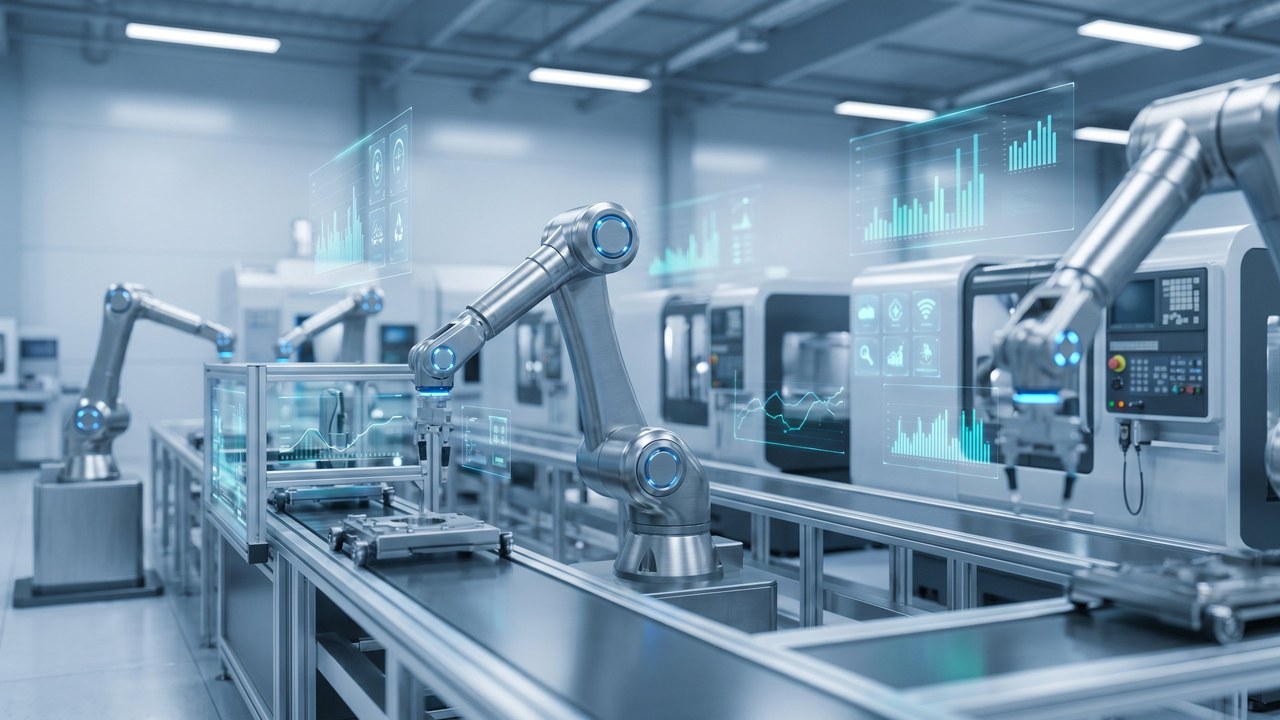
Capture and leverage production data in real-time. Our factoryworkx framework provides OEE transparency, anomaly detection, and what-if analyses, flexibly adaptable to your manufacturing.
Learn more →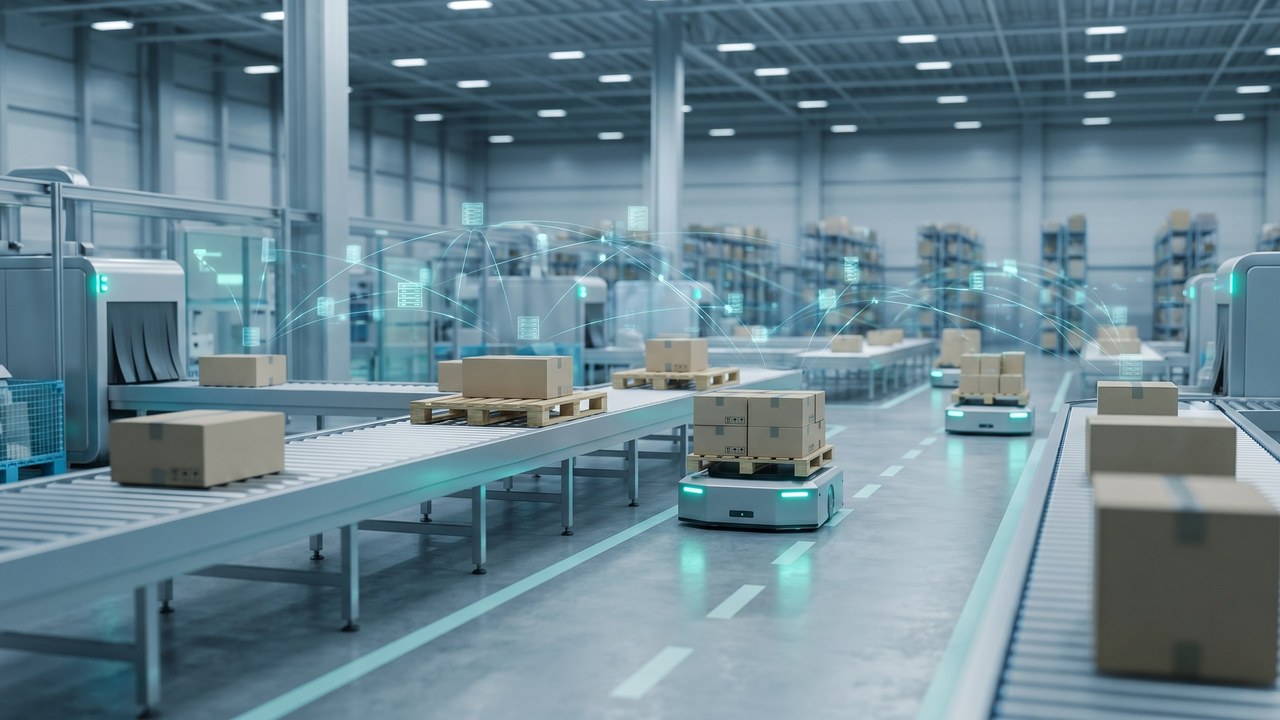
Automated electronic data exchange, ERP-integrated, compliance-secure. Accelerate order-to-cash, eliminate manual errors, the supply chain becomes self-documenting.
Learn more →
AI is becoming a fundamental capability for resilient manufacturing and supply chains. Value is only achieved when AI is embedded into end-to-end processes. High-quality data and strong operational discipline are prerequisites.
Learn more →Scalable, secure, and highly available infrastructure on AWS.
Flexible Software-as-a-Service; pay only for what you use.
Measurable benefits in days -
without a major IT project.
Manufacturing intelligence means consolidating and analysing production, quality and planning data into a single operational picture. Data from MES, ERP, metrology systems and spreadsheets is linked so that metrics such as OEE, scrap rate and process capability become continuously visible. The goal is shop floor transparency as the basis for data-driven manufacturing: faster decisions, fewer stoppages, more stable quality. metrologx connects existing data sources rather than replacing established systems.
An MES (manufacturing execution system) controls and monitors production at shop floor level: orders, machine states, quantities, times and quality data in real time. The difference between MES and ERP lies in time horizon and level of detail. ERP plans orders, material and capacity across days and weeks; MES executes those plans minute by minute and reports actual status back. When choosing MES software, look for open interfaces, modular design and SaaS operation.
OEE (overall equipment effectiveness) shows what share of planned production time actually results in good parts. The OEE formula is: OEE = availability x performance x quality. Availability captures downtime, performance captures speed losses, quality captures scrap and rework. An OEE of 85 percent is considered world class; many plants sit well below that. A reliable figure requires automated machine and production data capture rather than estimated times.
Supply chain intelligence means running the supply chain on data: orders, delivery schedules, despatch advices, stock levels and invoices are exchanged digitally, captured centrally and translated into metrics. Unlike classic supply chain management, which covers planning and organisation, the focus is on transparency and analysis: where the flow stalls, which supplier delivers late, where manual intervention occurs. The basis is automated electronic data interchange (EDI) with customers and suppliers.
EDI (electronic data interchange) is the standardised, automated exchange of business documents between the IT systems of trading partners. Orders, delivery schedules, despatch notes and invoices are no longer sent as PDF or fax and keyed in manually, but transferred directly from ERP to ERP in a defined format such as EDIFACT or VDA. The recipient processes the message without a media break. EDI has been standard in automotive, retail and logistics for decades.
The main advantages of EDI are speed, accuracy and traceability. Data is not retyped but transferred automatically, which removes entry errors, queries and delays. Processes such as order-to-cash run faster, invoices are paid earlier, delivery schedules are in the system immediately. Compared with supplier portals, where staff enter data by hand, duplicate maintenance disappears. Every message exchange is logged, which simplifies audits and complaint cases.
Process consulting and AI combines process advisory work with artificial intelligence for manufacturing companies. The principle: AI does not make poor processes better, only faster. Digitalisation consulting therefore comes first, ordering data flows, responsibilities and procedures before technology is introduced. On that basis, AI use cases are identified, assessed and implemented, from potential analysis through pilot projects to productive operation.
Proven AI use cases in manufacturing sit where data is plentiful and decisions recur: predictive quality, anomaly detection in process and measurement data, predictive maintenance, visual inspection through image recognition, automated root cause analysis, forecasting for demand and stock, and optimisation of changeover sequences. Machine learning in manufacturing pays off particularly with high product variance or expensive scrap. The best entry point is rarely the most spectacular use case, but the one with data already available.
Identifying AI use cases starts with processes, not technology: where do costs arise through scrap, downtime, manual work or late decisions? Where does data already exist that is not being used? This produces a longlist, assessed by benefit, data availability, effort and risk. Two or three candidates remain for a pilot. A structured AI potential analysis or an AI workshop with both business and IT participants delivers the result within a few days.
Schedule a non-binding initial consultation with our expert team and let's explore together how Operational Intelligence can drive your value.